Skip to content

Why Boiler Suits Are Essential in Hazardous Work Environments
- by Mike Johnson
Browse the full range here → Boiler Suits & Coveralls Collection
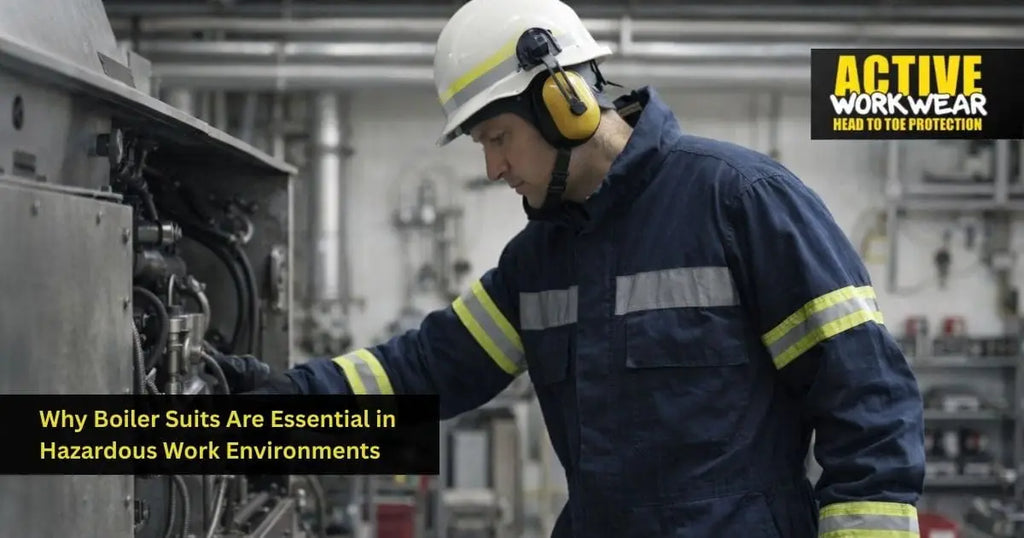
In high-risk industries such as construction, engineering, utilities and heavy manufacturing, protective clothing plays a critical role in reducing workplace injuries. Boiler suits remain one of the most practical garments for hazardous environments due to their full-body coverage, durability and compliance-ready design.
Selecting the correct protective clothing for demanding work conditions requires understanding the risks specific to your industry and choosing garments that meet compliance standards.
1. Full-Body Protection Against Workplace Hazards
Boiler suits provide continuous coverage from neck to ankle, helping to protect workers from dirt, oil, minor splashes, abrasions and mechanical risks. In environments where sharp tools, moving machinery or rough surfaces are present, reinforced fabrics reduce exposure to cuts and surface injuries.
Depending on the application, specialist variants such as flame-resistant or high-visibility coveralls may be required to meet industry regulations.
2. Improved Workplace Hygiene and Contamination Control
In machinery, fabrication and industrial settings, dirt, grease and chemical residues are common. Boiler suits act as an outer protective layer, preventing contaminants from transferring onto personal clothing and reducing cross-contamination risks.
This is particularly important in maintenance roles, plant operations and environments where cleanliness standards must be maintained.
3. Practical Storage for Tools and Equipment
Most boiler suits are designed with multiple pockets positioned for accessibility and safe storage. This allows workers to carry essential tools, measuring devices and personal items without relying on external belts or pouches.
Secure fastening systems and reinforced seams also improve durability during physically demanding tasks.
4. Enhanced Visibility and Compliance Options
In environments with low light or vehicle movement, high-visibility boiler suits improve worker visibility and reduce accident risk. Garments designed to meet standards such as EN ISO 20471 incorporate reflective tape and fluorescent materials for compliance.
Where welding or high-heat exposure is present, flame-retardant treated fabrics provide additional protection. Always verify the safety requirements specific to your industry before selecting protective clothing.
Choosing the Right Boiler Suit for Hazardous Work
Selecting the correct specification depends on workplace hazards, environmental exposure and regulatory obligations.
- Material strength: Polycotton blends offer durability for general trade use.
- Flame resistance: Required for welding and high-heat tasks.
- High visibility: Essential for roadside, rail and construction environments.
- Correct fit: Allows unrestricted movement while avoiding excess fabric that could catch in machinery.
Final Thoughts
Boiler suits remain a dependable solution for hazardous workplaces due to their practicality, durability and compliance-ready design. When matched correctly to workplace risks, they form a core part of an effective personal protective equipment strategy.
To explore available styles and safety-rated options, browse our full Boiler Suits & Coveralls collection.
Frequently Asked Questions
What is the purpose of wearing a boiler suit in hazardous workplaces?
A boiler suit is designed to provide full-body protective coverage in environments where workers are exposed to dirt, oil, sparks, minor chemical splashes or mechanical hazards. In high-risk industries such as construction, engineering and heavy manufacturing, boiler suits help reduce injury risk by covering everyday clothing and minimising direct exposure to workplace hazards.
Which industries require boiler suits as part of PPE?
Boiler suits are commonly used across construction, utilities, rail, automotive workshops, industrial maintenance and manufacturing sectors. While requirements vary depending on risk assessments, many hazardous workplaces specify protective coveralls as part of their standard personal protective equipment policy.
Do boiler suits protect against fire or electrical hazards?
Standard boiler suits provide basic coverage but are not automatically flame-resistant or arc-rated. In environments involving heat, welding or electrical risk, garments must meet the relevant fire-retardant or electrical safety standards. Always check product specifications to ensure compliance with site requirements.
Are boiler suits sufficient on their own for workplace safety?
Boiler suits form one layer of protection but are typically used alongside other PPE such as safety helmets, gloves, eye protection and safety footwear. The correct combination of equipment depends on the specific hazards present in the working environment.
What features should a safety-rated boiler suit include?
When selecting a boiler suit for hazardous conditions, look for durable fabric construction, reinforced seams, secure fastening systems and, where required, high-visibility panels or flame-retardant treatment. The correct specification should align with workplace safety standards and the level of exposure expected on site.
- Posted in:
- boiler suit
- boilersuits