Skip to content

Men’s Work Shorts: How to Choose the Right Pair for the Job
- by Mike Johnson
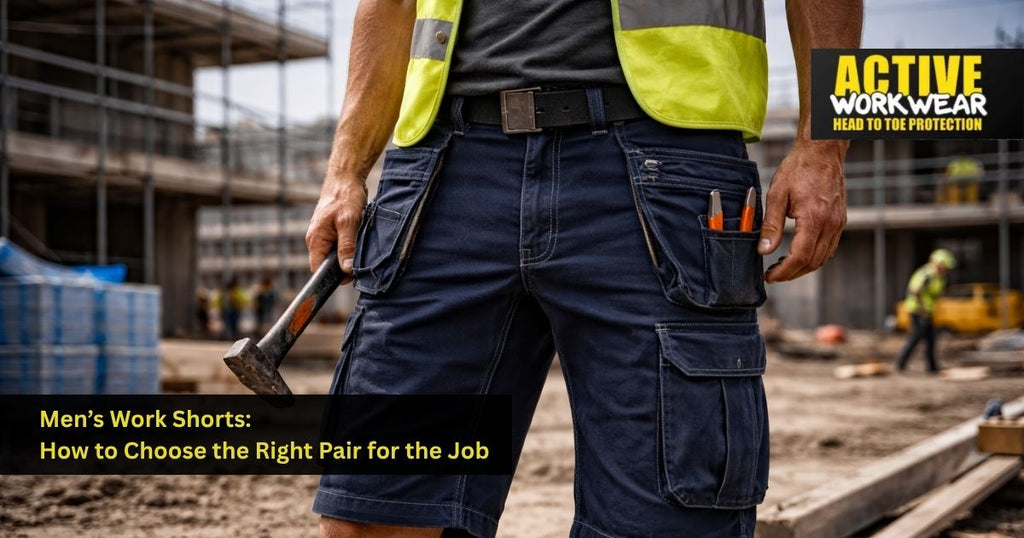
Picking up a pair of men’s work shorts sounds simple until you end up on site in a pair that sag at the knees, don’t hold your tools properly, or wear out after a few weeks.
The right pair makes a real difference, especially in warmer months when you need freedom to move without sacrificing durability or practicality.
This guide breaks down the different types of men’s work shorts, what actually matters on the job, and which styles suit different trades.
Work Shorts vs Work Trousers — When to Make the Switch
Most tradespeople stick with work trousers year-round, and for good reason. They offer more protection and are often required on site. But there are times when switching to men’s work shorts makes more sense.
When shorts make sense:
- Warm weather where full trousers become uncomfortable
- Indoor jobs like fit-outs or warehouse work
- Roles that involve a lot of movement or crouching
- Dry conditions where exposure isn’t a risk
When to stick with trousers:
- Cold, wet, or unpredictable weather
- Sites with strict PPE rules
- Work involving sparks, chemicals, or sharp debris
- Jobs where leg protection is essential
The bottom line: Shorts aren’t a replacement. They’re another tool. Use them when they actually make your day easier.
Types of Men’s Work Shorts
Not all men’s work shorts are built the same. The right choice depends on how you work day to day.
Cargo Work Shorts
Cargo shorts are the go-to for most trades. Plenty of pocket space, easy fit, and practical for carrying smaller tools and fixings.
But watch the build quality. Cheap versions start sagging fast once you load the pockets. Reinforced stitching makes a big difference here.
Stretch Work Shorts
If you’re constantly moving, climbing, or working in awkward positions, stretch shorts make life easier.
They give you more flexibility, especially around the crotch and thighs. Just keep in mind, the more stretch in the fabric, the more likely it is to wear out quicker on rough jobs.
Hi-Vis Work Shorts
Hi-vis work shorts are available for trades working near traffic or in low-light environments. They typically meet visibility standards required for roadside or rail-adjacent work. If hi-vis is relevant to your role, it’s worth reading our dedicated Hi-Vis Shorts Guide which covers compliant options in more detail.
Utility / Multi-Pocket Shorts
Utility shorts take the cargo concept further, adding additional smaller pockets for specific items. Ruler pockets, loop attachments for tools, phone pockets with reinforced lining, and back pockets with secure closures are all common features.
These are popular with carpenters, joiners, and tradespeople who prefer not to carry a tool belt for lighter jobs. The downside is weight and bulk, particularly when all pockets are in use.
Heavy-Duty Work Shorts
If your work is tough on clothing, don’t mess around with lightweight options.
Heavy-duty shorts with reinforced panels will last longer and handle abrasion better. They cost more upfront but save you replacing them every few months.
What to Look for in Men’s Work Shorts
It’s easy to get distracted by features you don’t actually need. Focus on what makes a difference on site.
-
Kneepad pockets if you’re regularly on your knees
-
Secure pockets so you’re not losing bits when crouching
-
Durable fabric that can handle site conditions
- Comfortable fit that doesn’t restrict movement
If it doesn’t help you work better, it’s not worth paying for.
Kneepad Pockets
This is one of the most overlooked features when buying work shorts. If your trade involves kneeling on hard or rough surfaces, shorts with built-in kneepad pockets are worth the extra cost.
Kneepad pockets sit on the front of each leg and hold a foam or hard-shell kneepad insert in position while you work. This is significantly more practical than a separate kneepad strap, which can slide or shift during movement.
A few things to check:
-
Pocket depth and size: The pocket should hold the kneepad securely without it shifting during movement. Check that the pocket is compatible with the kneepad brand you already use, or buy them as a matched set.
-
Access design: Some pockets open from the side, others from the top. Side-entry pockets tend to keep pads more secure.
- Adjustability: Better models allow height adjustment so the pad sits correctly over the kneecap regardless of leg length.
If you already have kneepads, check out the kneepads and accessories range to find compatible inserts for your shorts.
Pocket Layout and Tool Access
Think about how you actually work before deciding on pocket layout. If you’re constantly reaching for a pencil, measuring tape, or phone, you want pockets positioned where you can access them without straightening up or changing position.
Key considerations:
-
Thigh pockets should close securely (zip or button) to avoid items falling out when crouching
-
Rear pockets are useful for phones and wallets but check the closure; open-top rear pockets dump contents when you bend forward
-
Hammer loops and attachment points are useful for lightweight tools but add bulk around the hip
- Ruler/pencil pockets on the leg are useful for trades that use them constantly
Avoid shorts with too many pockets if you’re working in confined spaces. More pockets means more bulk, and that creates snag points in tight areas.
Fabric and Durability
Work shorts sit at the intersection of comfort and durability, and the fabric choice drives both.
Common fabrics:
-
Cotton twill (300–400gsm): Hard-wearing, comfortable, breathable. Good all-round choice for most trades in warm conditions.
-
Cotton/polyester blend: More resistant to shrinking and fading than pure cotton. Slightly less breathable
. -
Stretch blends (cotton/elastane or polyester/elastane): Excellent freedom of movement, but check the gsm weight. Lightweight stretch fabrics wear through faster on site.
- Cordura or ripstop panels: Used in heavy-duty shorts to reinforce high-wear areas. Adds durability without full weight increase.
If you’re doing physical work in warm weather, prioritise breathability alongside durability. A heavy cotton short in the right construction will outlast a cheap synthetic option and remain more comfortable throughout the day.
Fit and Sizing
Fit matters more than most people think. Too tight and you’ll feel it every time you crouch. Too loose and you’ll end up catching on things or constantly adjusting them.
Waist and hip sizing:
Most work shorts are sized by waist measurement. If you’re between sizes, go up rather than down. You can adjust with a belt, but you can’t fix a pair that are too tight in the seat or thighs.
Inseam length:
Work shorts typically come in a single leg length, but some brands offer short and regular options. A good working length is just above or at the knee. Too short creates exposure issues on rough surfaces; too long and you lose the freedom of movement that makes shorts worth wearing.
Waistband:
Look for a waistband with some adjustability, either a stretch section at the back or belt loops that accommodate a tool belt. A waistband that’s too rigid will become uncomfortable over a long shift, especially if you carry anything on your belt.
Movement test:
If you can try before you buy, crouch down and check the seat and inner thigh. That’s where most work shorts fail first. There should be no significant pulling or strain at the seam when you’re in a full crouch.
Best Work Shorts by Trade
Construction and Site Work
Construction work is tough on clothing, so durability comes first. You need heavier fabrics, reinforced panels, and pockets that won’t give out under load.
Look for shorts in the 300–400gsm range with Cordura or ripstop reinforcement on the knee and seat. Kneepad compatibility is important if you’re working at ground level. Cargo pockets with secure closures keep small fixings and tools accessible without the risk of losing them.
Electrical and Plumbing
Electricians and plumbers tend to work in a wider range of environments, from cramped residential spaces to open commercial sites. Flexibility of movement is the priority here.
Stretch work shorts, particularly those with stretch panels at the crotch and inner thigh, suit this trade well. Multiple smaller pockets are more useful than large cargo pouches. A slimmer cut reduces the chance of snagging on pipework or cable runs in tight spaces.
Warehousing and Logistics
Warehouse environments are typically climate-controlled but physically demanding, with long periods of walking and lifting. Comfort and freedom of movement matter more than heavy-duty protection.
A lightweight cotton or cotton-poly blend works well here. Large thigh pockets are useful for holding a scanner or notepad. Stretch waistbands help with extended shifts. Heavy-duty features add unnecessary weight and heat in this environment.
Groundwork and Landscaping
Groundworkers and landscapers work in some of the harshest conditions for workwear. Abrasion from ground contact, debris, and outdoor exposure put significant stress on clothing.
Heavy-duty shorts with reinforced knees and seat are the sensible choice. Darker colours and robust fabrics resist staining and show less wear. Kneepad pockets are particularly useful if you’re regularly working at ground level planting, laying, or digging.
Top Brands for Men’s Work Shorts
A few brands consistently deliver quality that holds up in trade use:
Snickers
Snickers is the benchmark for many tradespeople, particularly in the construction and electrical trades. Their work shorts feature well-thought-out pocket layouts, quality fabric construction, and genuine kneepad compatibility with their own knee protection range. The price point is higher, but the longevity justifies it for daily use.
Portwest
Portwest offer good value across their work shorts range without sacrificing core functionality. They cover a wide variety of types including hi-vis options, stretch shorts, and standard cargo styles. A practical choice for employers kitting out a team, or individuals looking for reliable performance without premium pricing.
Blaklader
Blaklader’s work shorts are built for heavy use. Their construction-focused styles use high-grade fabrics with reinforced panels and purpose-built kneepad pockets. If you’re in groundwork, construction, or any trade that puts hard wear on clothing, Blaklader is worth the investment.
Apache
Apache work shorts are a solid choice for tradespeople who want practical, hard-wearing options at a mid-range price point. Their stretch work trouser range translates well into shorts, offering good movement and durability for everyday site use.
Browse the full workwear range to compare styles and find the right fit for your trade.
FAQs
What are the best work shorts for construction?
For construction, prioritise heavy-duty shorts with reinforced knees, kneepad pockets, and secure cargo pockets. Brands like Snickers and Blaklader are well-regarded for this. Look for a fabric weight of at least 300gsm and check that the shorts are compatible with your existing kneepad system.
Do work shorts come with kneepad pockets?
Yes, many work shorts include built-in kneepad pockets, though not all styles. Check the product specification before buying. Snickers and Blaklader both offer shorts with adjustable kneepad pockets. If your current shorts don’t have pockets, separate knee pads with strap systems are an alternative.
Can I wear work shorts on a construction site?
That depends on the site’s PPE rules. Some sites require full leg coverage as standard, particularly where there is a risk of cuts, abrasions, or contact with hazardous materials. Always check the site-specific rules before turning up in shorts. On sites where shorts are permitted, ensure they meet any required standards for hi-vis or other visibility requirements if applicable.
What is the difference between stretch and standard work shorts?
Standard work shorts use a fixed fabric construction, typically cotton twill or a cotton-poly blend. They tend to be more durable in abrasive conditions but offer less flexibility. Stretch work shorts include elastane or similar in the fabric or as panels, giving greater range of movement. Stretch shorts suit trades with lots of bending, climbing, or crouching, but may wear faster in rough environments.
Are hi-vis work shorts available?
Yes. Hi-vis work shorts are available for roles requiring visibility near traffic or in rail and highways environments. For a full breakdown of compliant options and standards guidance, see our Hi-Vis Shorts Guide.
Choosing the Right Pair
Men’s work shorts are a solid addition to your kit, but only if you choose the right pair for how you actually work.
If your job is tough on clothing, go for heavy-duty options. If movement matters more, a good stretch pair will make your day easier. For general site work, a well-built cargo short covers most needs.
Get the fit right, don’t cut corners on quality, and you’ll end up with a pair that lasts the season and beyond.
If you’re ready to upgrade, browse our range of men’s work shorts built for real trade use and find a pair that holds up on site.
- Posted in:
- cargo work shorts
- electrician workwear
- heavy duty work shorts
- hi vis work shorts
- mens work shorts
- stretch work shorts
- work shorts
- workwear shorts