Skip to content

Work T-Shirts and Polo Shirts for Tradespeople: A Practical Buying Guide
- by Mike Johnson
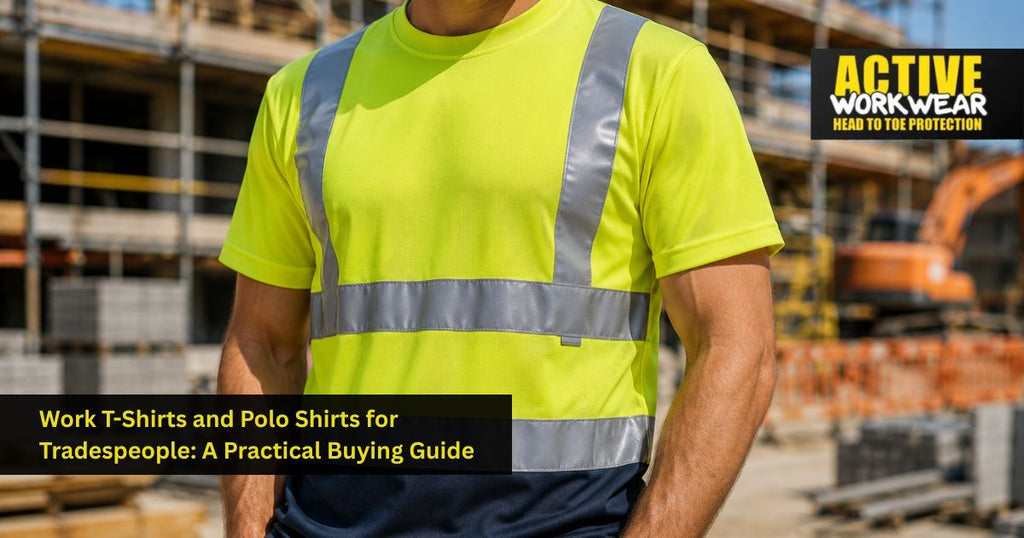
A work t-shirt or polo shirt sounds simple - it's just a top, right? But there's a significant difference between a fashion t-shirt that falls apart after a few site washes and a purpose-built workwear polo that stays presentable, keeps you comfortable through a full shift, and survives the kind of treatment that would end a high street garment in a month.
Whether you need hi vis compliance, moisture management for outdoor summer work, or simply a trade-quality shirt that holds its shape and colour through regular heavy washing, this guide covers what to look for.
Work T-Shirts vs Polo Shirts: Which Do You Need?
Both are valid workwear options, but they suit different roles and environments.
Work t-shirts (crew neck, short sleeve) are the more casual end. Better for physical, active work where you're unlikely to be client-facing - groundwork, labouring, active site work. Easier to layer under fleeces and jackets. On many sites they're the default choice for summer months.
Work polo shirts (collared, short sleeve) strike a balance between comfort and a smarter appearance. The collar matters more than it sounds - on client-facing roles (electricians, plumbers, gas engineers visiting domestic properties), a polo reads as more professional than a plain t-shirt. Many companies use polo shirts for site and customer-facing staff as a practical branded uniform option.
Both are available in hi vis versions for regulated sites, and both can usually be embroidered or printed for company branding.
Fabric and Construction: What Actually Matters
Polycotton (65/35 or 35/65)
The most common fabric for workwear t-shirts and polos. A 65% polyester / 35% cotton blend is hardwearing, quick-drying, and holds its shape and colour through repeated 60°C washes. Pure cotton feels softer but wears faster, fades more quickly, and stays wet longer when you sweat.
Some workwear polos flip this ratio - 35% polyester / 65% cotton - for a softer feel at a slight durability trade-off. Suitable for less physically demanding roles or office-to-site environments.
Moisture-wicking / performance fabric
For active outdoor work in warm weather, a moisture-wicking polyester fabric pulls sweat away from the skin and helps it evaporate faster. This makes a noticeable difference on a hot site compared to a standard cotton t-shirt, which absorbs moisture and stays damp. Helly Hansen's LIFA base layers use a similar principle; many workwear brands offer a budget version of this in their t-shirt range.
Piqué weave (polo shirts)
The textured, knitted fabric used on most polo shirts. Piqué (sometimes called "waffle" weave) is more breathable than a plain knit, holds its shape better through washing, and resists surface wear. Standard for quality workwear polos.
Weight
Measured in grams per square metre (GSM). Lighter fabrics (140-170 GSM) are cooler and better for summer; heavier fabrics (200-220 GSM) feel more substantial, last longer, and are more suitable for year-round use. For workwear that's going to be washed frequently, a mid-weight 180-200 GSM polycotton hits the right balance.
Hi Vis Work T-Shirts and Polo Shirts
For anyone working in environments requiring high visibility - highways, construction near traffic, rail, utilities - hi vis t-shirts and polo shirts are a practical option when full hi vis jackets or vests would be too warm. In colder months, many tradespeople layer hi vis polo shirts with hi vis jackets and outerwear for year-round compliance.
Hi vis t-shirts and polos must carry EN ISO 20471 certification at the appropriate class to count as compliant PPE. Be careful here - not all orange or yellow t-shirts are hi vis. The certification requires specific amounts of fluorescent background material and retroreflective tape. A plain fluorescent yellow t-shirt with no reflective strips is not EN ISO 20471 compliant.
Class 2 is the most common requirement for construction and highways. Class 2 hi vis t-shirts and polos have reflective tape running across the chest and typically over the shoulders - they're more substantial than a plain t-shirt but far more breathable than a jacket or vest in summer.
For very hot weather on compliant sites, a hi vis polo shirt or t-shirt may be permitted as the primary hi vis garment - but always check with your site supervisor or refer to your risk assessment. Some sites require a hi vis vest or jacket over all other clothing regardless.
Work Polo Shirts for Company Branding
Polo shirts are the standard choice for company workwear that combines a professional look with site practicality. The main considerations if you're buying for a team:
Embroidery vs print
Embroidery is more durable on polycotton workwear - it holds up through repeated washing better than screen printing, which can crack and peel over time. For small logos and text, embroidery is the standard choice for workwear. Printed transfers work better for photographic or multi-colour designs but are less hardwearing.
Colour durability
Dark colours (navy, charcoal, black) fade less obviously than lighter colours over repeated washes. Navy is the most popular colour for company workwear polos across UK trades - it looks professional, hides light soil, and fades gracefully. If you want colour consistency across a team over time, navy or black are safer choices than white or light grey.
Sizing for a team
Workwear polos are typically sized in standard S-3XL or by chest measurement. Some brands (Portwest, ProJob, Result) extend to 4XL or 5XL for larger team members. Always order a sample size before committing to a large batch - the same size designation from different brands can vary significantly in cut. Checking the Result size chart before ordering can help reduce sizing inconsistencies across teams.
Best Brands for Work T-Shirts and Polo Shirts
Portwest
Strong across the range - t-shirts, polos, and hi vis versions of both. Their polycotton polos offer excellent value for team purchases, and their hi vis t-shirts and polos are properly EN ISO 20471 certified rather than just fluorescent coloured. Particularly good for uniform buying for larger teams. For team orders, checking the Portwest size chart before purchasing is recommended as fits can vary between ranges.
ProJob
ProJob's work shirts and polos are popular with trades wanting a smarter look without a premium price. The fabric quality is notably good for the price point, and the cut flatters most body types without being fashion-forward. Available in a range of colours including muted tones that work well for company branding.
Helly Hansen
At the premium end. Helly Hansen's workwear t-shirts use moisture-wicking fabric and are built for physically active tradespeople working in warm conditions. Not the cheapest option but noticeably more comfortable on a hot site than standard polycotton.
Result (and Result Core)
A popular choice for embroidered uniform polo shirts. Result's range covers a huge colour palette, and the polycotton construction handles commercial embroidery and repeated washing well. A reliable mid-market option for customer-facing workwear.
Regatta
Good range of polo shirts and t-shirts suited to outdoor trades. Regatta workwear is particularly popular with landscaping, groundskeeping, and utilities teams.
Work T-Shirts and Polos for Summer: What to Consider
Summer is when work t-shirts and polos get the most use - and when getting the fabric right matters most. On a hot site, the difference between a breathable moisture-wicking fabric and a heavy cotton t-shirt is the difference between staying comfortable and spending the afternoon in a damp, heavy shirt. Choosing lightweight breathable PPE for summer can make long outdoor shifts far more comfortable during hot weather
A few practical tips for summer workwear tops:
- Choose lighter weight fabrics (140-180 GSM) for hot weather
- Moisture-wicking polyester or polycotton performs better than pure cotton when you're active
- Light colours reflect heat but show soil faster; dark colours absorb more heat but hide dirt better - navy or medium grey is the practical middle ground
- If hi vis is required, look for certified hi vis polo shirts rather than vests over t-shirts in very hot conditions - more comfortable with the same compliance
- Pack two shirts for long summer days if possible - a fresh shirt after lunch makes a real difference in sustained hot weather
Washing and Care
Work polo shirts and t-shirts are generally machine washable at 40-60°C. Polycotton handles higher temperatures well. For hi vis garments, follow the care label carefully - high heat and some detergents can degrade fluorescent pigments. Avoid bleach on hi vis clothing.
For company uniforms with embroidery, wash inside out to reduce surface wear on the embroidered area.
Shop Work T-Shirts and Polo Shirts at Active Workwear
We stock a wide range of work t-shirts, polo shirts, and hi vis tops from Portwest, ProJob, Helly Hansen, Result, Regatta, and more - including hi vis EN ISO 20471 certified versions for regulated sites.
Browse our work shirts, polo shirts, and t-shirts collection for the full range, available for fast UK delivery or in store. We also offer embroidery and printing services for company branding.
Frequently Asked Questions
What is the best work polo shirt for tradespeople?
For everyday site and customer-facing work, ProJob and Portwest polycotton polos offer the best balance of quality, durability, and value. For physically active work in warm conditions, Helly Hansen moisture-wicking tops are worth the higher price. For team uniforms, Result Core or Portwest are reliable choices for embroidery and colour consistency.
Do work t-shirts need to be hi vis?
Only if your role requires hi vis compliance. If your risk assessment specifies EN ISO 20471 Class 2 upper body coverage, a standard t-shirt without certification does not meet that requirement - even if it's fluorescent yellow or orange. Look specifically for t-shirts carrying EN ISO 20471 Class 2 certification with retroreflective tape.
Can work polo shirts be embroidered?
Yes - most polycotton work polo shirts are designed with embroidery in mind. The weave structure of piqué polo fabric handles embroidery particularly well. Avoid embroidering very lightweight or moisture-wicking technical fabrics, as the needle distorts the fabric backing more easily.
What GSM should work t-shirts be?
For everyday workwear, 180-200 GSM polycotton hits the right balance of durability and comfort. For summer-only use, 140-170 GSM lightweight fabric keeps you cooler. For heavier-duty or year-round use, 200 GSM+ lasts longer through frequent washing.
Are hi vis polo shirts as protective as hi vis vests?
If correctly certified to EN ISO 20471 at the required class, yes - a compliant hi vis polo shirt provides the same level of certified protection as a hi vis vest. The difference is fit and temperature: a polo shirt is more comfortable in hot weather than a mesh vest over a t-shirt, and fits better under jacket layers.
How do I size work polo shirts for a team order?
Always request a size sample before a bulk order. Sizing varies between brands even at the same nominal size. For team orders, collect actual chest measurements from staff and cross-reference with the brand's own size chart. Build in some variation - one or two sizes either side of your main size - to accommodate people who measure on a size boundary.