Skip to content

Work Belts and Tool Belts: The Complete UK Buying Guide
- by Mike Johnson

There are two completely different things people mean by "work belt", and buying the wrong one is a common and annoying mistake.
One is a belt that holds your trousers up and takes a bit of abuse. The other is a tool-carrying rig - a belt with pouches hanging off it, sometimes with braces to take the weight.
This guide covers both, explains why the modular approach has largely replaced the traditional one-piece tool belt, and names every belt, pouch and holder in the Active Workwear range with prices.
Belt, Rig, or Vest?
Three ways to carry tools on your body, and they suit different work.
A trouser belt does one job: holds your trousers up without stretching, cracking or failing at the buckle. If your tools live in holster pockets or a bag, this is all you need.
A tool belt or rig carries weight on your hips. Good for carpenters, fixers and anyone using the same handful of tools all day. The drawback is that loaded belts sit heavy on the lower back, which is why braces exist.
A tool vest moves the weight onto your shoulders and off your hips. Increasingly popular, particularly for anyone with back trouble or working at height where a bulky hip rig catches on things.
Being straight about the range: Active Workwear stock one complete tool belt rig, a good spread of trouser belts, individual pouches you can build your own setup from, and a decent tool vest range. If you want an off-the-shelf full rig there is essentially one option. If you want to build a setup from parts, or you want a good trouser belt, there is plenty.
Trouser Belts
More considered than people expect. A cheap belt stretches, the buckle scratches surfaces, and it fails at the hole you actually use.
Budget: Under £20
- The Apache Work Belt with logo buckle (Horizon, £8.99) is compatible with all Apache work trousers and the cheapest belt here.
- The Tranemo Elastic Belt (90370, £10.00) is the budget elasticated option. Elastic belts give a little as you bend and crouch, which is more comfortable over a long day than a rigid belt pulled tight.
- The Blaklader Flexi Work Belt with glossy branded buckle (4004, £14.76) and the Snickers 9018 Lightweight Elasticated Work Belt (£17.70), designed for Snickers LiteWork trousers, both use stretch construction.
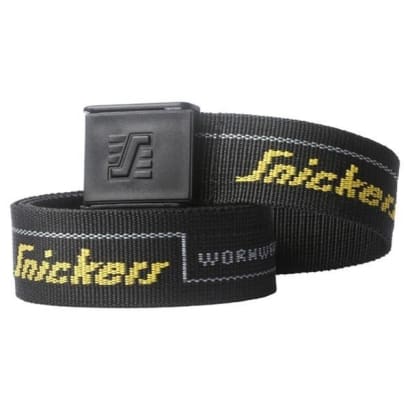
- The Snickers 9033 Workwear Logo Belt with non-abrasive buckle (£18.30) is worth a specific mention. A non-abrasive buckle will not scratch a worktop, a car door or a client's kitchen unit when you lean against it. If you work in finished properties that is not a small detail.
Mid-Range: £21 to £30

- The Blaklader Durable Stretch Work Belt with rubber-coated logo buckle (4038, £21.15) and the Snickers 9071 AllroundWork Webbing Belt with rubber-coated buckle (£21.60) both use a rubber-coated buckle, which serves the same purpose as the non-abrasive one above.
- The Tranemo Leather Belt (90130, £27.60) is the entry point for leather.
For flame retardant environments, the Blaklader FR Stretch Work Belt with branded buckle (4039, £27.00) is certified where a standard belt is not. If your risk assessment specifies FR clothing, your belt is part of that system.
Leather: £41 and Above
Leather lasts longer than webbing and looks better as it ages, but it costs more and does not stretch.
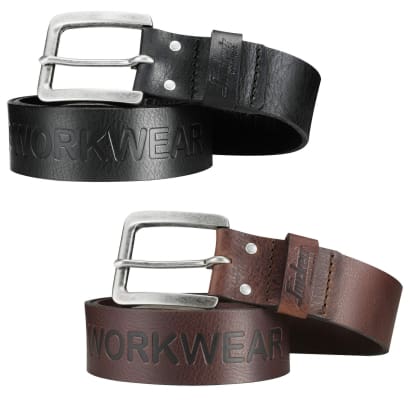
- The Tranemo 130cm Leather Belt (90930, £41.70) covers larger waist sizes, which is worth knowing because many belts top out before 130cm.
- The Blaklader Sturdy Leather Work Belt (4007, £49.14) is the mid-weight option.
- The Snickers 9034 Classic Rugged Leather Belt (£63.70) is the premium choice and the one to buy if you want a belt that outlasts several pairs of trousers.
Which to Choose
Elasticated or stretch if you bend, crouch and kneel constantly. The give makes a real difference by the afternoon.
Webbing for general site work where the belt takes abuse and you do not want to care about it.
Leather if you want longevity, or if the belt is visible in client-facing work.
Non-abrasive or rubber-coated buckle if you work in finished properties or around vehicles.
FR-certified if your work requires it - and check, because this one gets overlooked.
Tool Belts and Rigs
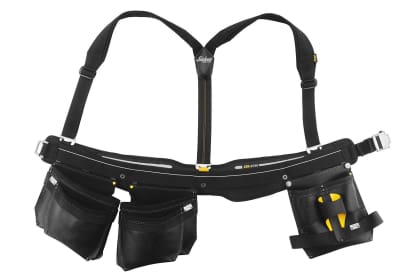
The Snickers XTR Carpenter's Tool Belt with braces and leather pouches (9770, £194.14) is the complete rig in the range. Belt, braces and leather pouches as one system.
The braces matter more than people assume. A loaded tool belt can carry several kilos on your hips, and over a full day that pulls on your lower back. Braces transfer part of that load to your shoulders. If you have ever finished a day of fixing with an aching back, that is usually why.
At £194 it is a serious purchase, and it is aimed squarely at carpenters and fixers who wear a rig all day every day. For occasional use it is more than most people need.
Building Your Own Setup
For most people the modular approach makes more sense than a full rig, and it is how the range is actually built. Start with a belt, add only the pouches you need, and change the setup by trade or by job.
Pouches
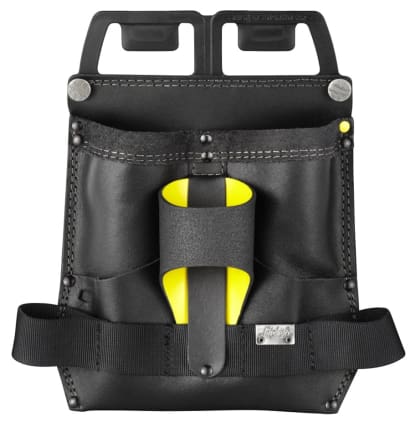
- The Snickers 9775 Carpenters Leather Tool Pouch (£55.72) and the Snickers 9785 Electricians Leather Tool Belt Pouch (£55.72) are trade-specific - different pocket layouts for different tools.
- The Snickers 9795 Leather Nail and Screw Holder Pouches (£79.60) cover fixings, which is the thing most often fumbled for.
Hammer Holders

- The Snickers 9082 Flexi Metal Hammer Holder (£9.40) and the Snickers 9716 Ergonomic Hammer Holster (£10.15) both do the same job slightly differently. The metal holder is quicker to drop a hammer into; the holster is more secure when you are moving about.
- The Blaklader 4020 Metal Hammer Holder with hook and loop fastening (£11.43) attaches without threading onto a belt, so it can go on and come off without unbuckling. Currently out of stock, so check availability.
The Attachment Problem
The Snickers 9700 Flexible Hook and Loop Fastening System (£4.05) is the piece people do not know exists. It lets Snickers pouches attach to a standard trouser belt rather than requiring a dedicated tool belt.
For four pounds it turns a belt you already own into a modular system. If you are hesitating over whether you need a proper rig, start here.
Tool Vests: The Alternative
If a loaded belt hurts your back, a vest is the answer. The weight sits on your shoulders and across your torso rather than pulling down on your hips.
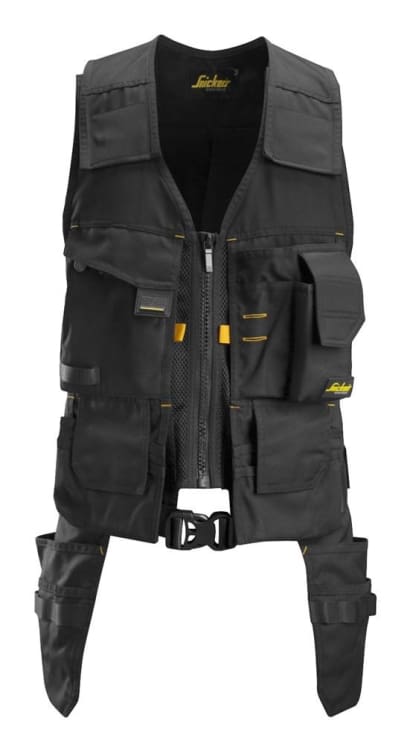
- The Portwest Work Vest multi-pocket waistcoat (C704, £11.20) is the budget entry point.
- The Result Safari Multi-Pocket Waistcoat (R45X, £19.88) sits just above it.
- The Portwest PW3 Hi Vis Class 1 Tool Vest (PW308, £35.56) combines tool storage with hi-vis compliance, which saves wearing both.
- The Blaklader 3105 Cotton Tool Vest (£61.29), the Snickers 4250 AllroundWork Toolvest with holster pockets (£95.90), the Helly Hansen Alna 2.0 Hi Vis Stretch Tool Vest (77120, £105.00) and the Blaklader X1900 Cotton and Mesh Tool Vest (3119, £108.27) cover the premium end.
We have a separate tool vests buying guide if a vest is the direction you want to go.
Matching to Your Trade
Carpenters and first fix. The most tools, carried all day. The Snickers XTR rig at £194.14 if you want it done properly, or a leather belt plus the 9775 carpenters pouch and a hammer holder.
Electricians. Fewer, smaller tools. A good belt plus the 9785 electricians pouch at £55.72, or a tool vest if you spend time in lofts and risers where a hip rig catches.
Plumbers and heating engineers. In and out of cupboards and under sinks. A bulky rig is a liability - a vest or a belt with one pouch works better.
General site and labouring. Just a solid trouser belt. The Snickers 9071 webbing at £21.60 or the Blaklader 4038 stretch at £21.15.
Working at height. Nothing that dangles or catches. A vest, or a minimal belt setup. Note that a work positioning belt such as the Portwest FP08 EN358 Webbing Harness Belt (£11.75) is height safety equipment, not a tool belt, and the two should not be confused.
Client-facing and domestic work. Non-abrasive buckle so you do not mark anything. The Snickers 9033 at £18.30.
FR environments. The Blaklader 4039 FR belt at £27.00.
Care and Fit
Measure properly. Belt sizing is usually taken from the buckle to the middle hole, not the overall length. If you are between sizes, go up - a belt on the last hole will wear through at that point.
Leather needs occasional conditioning, particularly if it gets wet. Dry it at room temperature, never on a radiator.
Webbing and stretch can usually be machine washed, which matters more than it sounds if you work somewhere mucky.
Replace a belt when the stitching at the buckle goes, the leather cracks across a fold, or the elastic has stretched and no longer holds. A belt that fails while you are carrying tools is a nuisance at best.
Do not overload a belt rig. The common mistake is carrying every tool you might need rather than the ones you will. Weight on the hips accumulates into back trouble over a career, and the fix is carrying less or moving to a vest.
Frequently Asked Questions
What is the difference between a work belt and a tool belt?
A work belt holds your trousers up. A tool belt carries tools, usually with pouches attached and sometimes braces to take the weight. People use both terms loosely, which is why they end up with the wrong one.
Do I need braces with a tool belt?
If the belt is loaded and you wear it all day, yes. A full rig can carry several kilos on your hips, and braces move part of that onto your shoulders. Your lower back will notice the difference.
Can I attach pouches to a normal trouser belt?
Yes. The Snickers 9700 hook and loop fastening system at £4.05 lets pouches attach to a standard belt, which is the cheapest way into a modular setup.
Leather or webbing for a work belt?
Leather lasts longer and looks better with age but costs more and does not give. Webbing and stretch are cheaper, washable and more comfortable if you bend and kneel a lot.
What is a non-abrasive buckle and does it matter?
A buckle coated or finished so it will not scratch surfaces. It matters if you work in finished properties, kitchens or around vehicles, where leaning against a worktop with a metal buckle leaves a mark.
Do I need a flame retardant belt?
If your work requires certified FR clothing, yes. Your belt is part of that system and a standard one is not certified. The Blaklader 4039 at £27.00 is the FR option.
Is a tool vest better than a tool belt?
For back comfort, usually. A vest spreads weight across your shoulders rather than loading your hips, and it does not catch on things at height. A belt gives quicker access to the tools you use constantly.
Where to Start
If you just need a belt, spend £15 to £22 on a stretch or webbing belt with a non-marking buckle, and more if you want leather.
If you want to carry tools, start modular rather than buying a full rig. A belt plus the £4.05 attachment system plus one pouch gets you going for well under £80, and you can add to it as you work out what you actually reach for.
Browse the tool belts and holders range, the wider belts and tool holders collection, or the tool vests and belts collection. For trousers with built-in holster pockets, see the work trousers range.
- Posted in:
- Blaklader
- Buying Guides
- Hammer Holders
- snickers
- tool belts
- Tool Pouches
- tool vests
- Tranemo
- Work Belts
- Workwear Accessories