Skip to content

The Essential Electrical PPE Guide: What UK Electricians Must Know in 2026
- by Mike Johnson
Picture this: You're working on a live panel, focused on the task at hand, when suddenly there's a flash. The heat hits you before you even register what's happened. Without proper protection, that split second could change everything.
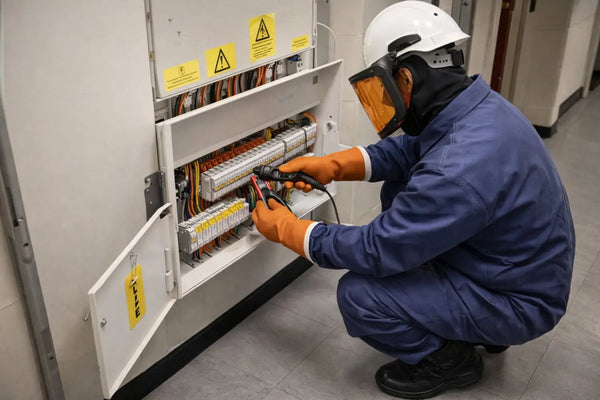
Electrical PPE isn't just another item on your equipment list - it's what stands between you and potentially fatal workplace hazards. Whether you're rewiring a domestic property or managing high-voltage industrial systems, the right protective gear can mean the difference between going home safe and not going home at all.
The numbers don't lie. Electrical safety procedures are critical in preventing death or injury caused by electric shock or burns. Without adequate protection, you're exposed to high-voltage currents, arc flashes, and sudden electrical explosions. Under the Electricity at Work Regulations 1989, employers must avoid live working wherever possible and provide suitable PPE free of charge when risk assessments identify the need.
But here's the thing - knowing you need PPE and understanding what actually works are two different matters entirely.
This guide cuts through the confusion surrounding electrical PPE. You'll discover which essential items belong in every electrician's kit, how the latest 2026 compliance requirements affect your daily work, and why electrical PPE must conform to UK safety standards. We'll also cover proper inspection techniques and which specific gear matches different voltage levels and hazard types.
Whether you've been in the trade for decades or you're just starting out, this guide ensures you stay protected, compliant, and confident when facing electrical hazards.
Electricians and Utility Services
Utility crews face some of the most dangerous conditions imaginable. Live electrical wires crackling overhead, storms bearing down, and repair work at dizzying heights - all in a day's work. These professionals rely on arc-rated face protection, flame-resistant clothing, electrical-rated gloves, and insulated tools to stay safe.
When the weather turns nasty, lineman flame-resistant rain gear becomes essential. It's not just about staying dry - it's about maintaining protection against both moisture and fire hazards while keeping the flexibility needed during emergency power restoration operations.
Construction and Manufacturing
Construction sites present their own electrical nightmare. Exposed components, temporary power systems, and constantly changing conditions create accident risks at every turn. Panel upgrades and high-voltage distribution work demand arc flash suits and face shields to protect against the intense heat and energy release.
Manufacturing facilities aren't any safer. Automated machinery and high-power equipment create constant threats. Workers maintaining or repairing these machines face daily risks of electrical shocks and devastating arc flashes. Without proper protection, a routine maintenance task can turn deadly in milliseconds.
The 8 Essential Items in an Electrical PPE Kit
Your safety depends on having the right protective equipment for the job. Each piece in your electrical PPE kit serves a specific purpose, and cutting corners isn't an option when your life is on the line.
At Active Workwear, we understand that proper electrical protection goes beyond just meeting regulations - it's about giving you confidence to work safely in hazardous environments.
1. Insulated gloves and sleeves
Your hands are your most valuable tools, and insulated gloves are their first line of defence against electrical shock. Class 0 gloves protect against up to 1,000V, whilst Class 3 offers protection up to 26,500V AC.
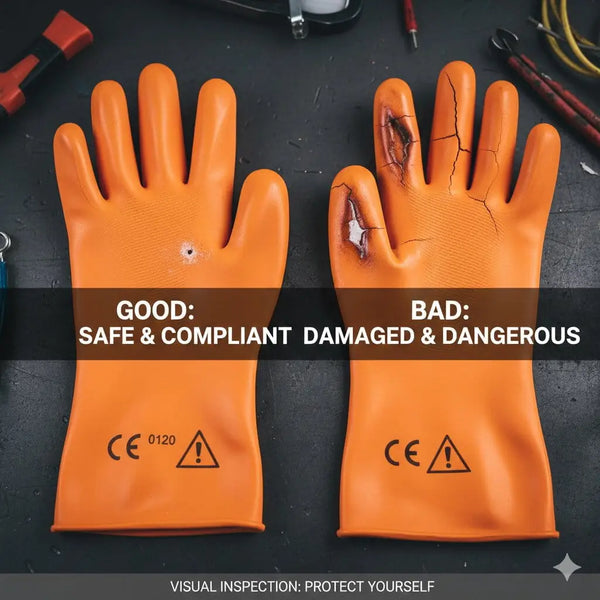
Always inspect gloves before each use by inflating them to detect defects. Look for any signs of wear, punctures, or damage that could compromise their protective qualities. Remember, insulated sleeves provide extended protection for your arms during high-voltage operations - don't overlook this critical addition.
2. Arc-rated and flame-resistant clothing
When an arc flash occurs, you need clothing that won't become part of the problem. Arc-rated clothing protects against the intense heat generated by electrical arcs, and these garments undergo rigorous testing under EN 61482-2 standards, which assess the entire item—including seams, fastenings, and zips.
Choose clothing with appropriate ATPV (Arc Thermal Protective Value) ratings measured in cal/cm². Values range from 4 cal/cm² for basic protection to 40 cal/cm² for high-risk environments. The higher the rating, the better your protection against thermal energy.
3. Face shields and arc flash hoods
Your face and head need protection from both heat and electromagnetic radiation from arc flashes. European standards require testing to EN 166 for optical properties and EN 170 for UV protection.
Arc flash hoods offer full 360-degree head and neck protection, often providing 40 to 47 cal/cm² protection when combined with switching suits. These aren't just safety equipment - they're your shield against potentially disfiguring injuries.
4. Safety glasses and arc-rated goggles
Even at hazard category 0, quality safety glasses are mandatory. Look for glasses with non-conductive frames that are shatterproof, anti-static, and UV protected. For precise electrical work, select glasses with anti-fog coatings and impact resistance rated to EN166 F standards.
Clear vision means safer work - fogged or damaged eyewear puts you at risk.
5. Dielectric boots and insulated footwear
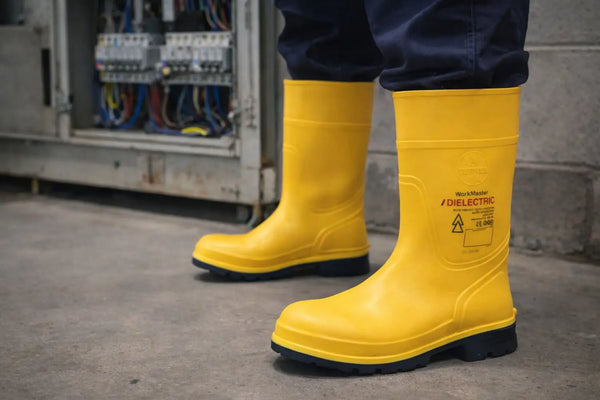
Dielectric boots prevent electric current from being grounded through your feet. Unlike leather boots, their performance remains uncompromised when wet. Every certified boot undergoes individual electrical testing before leaving the factory.
According to EN 50321-1:2018 standards, all dielectric footwear must be re-tested annually. This isn't just a recommendation - it's essential for maintaining the protective qualities that keep you safe.
6. Hearing protection for high-noise zones
Electrical work often occurs in environments exceeding 85 dB, where hearing protection becomes mandatory. Choose protectors that reduce noise to a safe level without causing over-protection (below 70 dB), which could prevent hearing warning signals.
You need to hear danger coming - but not at the expense of your long-term hearing health.
7. Electrical-grade hard hats
Standard hard hats won't cut it for electrical work. Helmets for electrical work must comply with EN 50365 standards, withstanding 10,000V during testing whilst protecting against 1000V AC or 1500V DC in normal use. These helmets cannot have ventilation holes, as these might allow electrical currents to enter.
Protection overhead matters just as much as protection everywhere else.
8. Respiratory protection in dusty or toxic areas
When working in ceiling cavities or dusty environments, proper respiratory protection shields your lungs from hazards like asbestos, silica dust, and mould. For electrical work sites, select non-conductive respirators with appropriate P100 philtres for maximum protection.
Your lungs deserve the same protection as the rest of your body - don't compromise on respiratory safety.
Key Features to Look for in Electrical PPE Gear

So you know what equipment you need - but how do you choose gear that actually protects you when it counts?
Not all electrical PPE is created equal. The difference between adequate protection and potentially fatal exposure often comes down to understanding which features matter most for your specific work environment.
Voltage rating and arc flash protection
Getting voltage ratings wrong isn't just a mistake - it's dangerous. Insulating gloves come in different classes: Class 00 (500V AC), Class 0 (1,000V AC), up to Class 4 (36,000V AC). Match your gloves to your maximum working voltage, then go one class higher for safety margin.
For arc flash protection, look for garments with clear ATPV (Arc Thermal Performance Value) or EBT (Energy Breakopen Threshold) ratings. These numbers tell you exactly how much thermal energy the fabric can handle before it breaks down.
Non-conductive and insulated materials
Here's what separates electrical PPE from regular workwear: proper electrical PPE must feature high-dielectric materials that prevent electricity from passing through the body. Rubber components should undergo regular dielectric testing, whilst leather protectors should shield insulating gloves from cuts and punctures.
Think of these materials as your electrical barrier - they're engineered specifically to stop current in its tracks.
Durability, comfort, and proper fit
Ever tried working in gear that doesn't fit properly? Comfort is defined as the absence of discomfort. Choose PPE that balances thermal protection with breathability to prevent heat stress during extended wear.
Ill-fitting equipment compromises both safety and effectiveness - gloves should fit snugly without restricting movement. If you can't work efficiently in your PPE, you're more likely to remove it when you shouldn't.
Compliance with UK and EU safety standards
All new PPE placed on the GB market must be UKCA or CE marked and supplied with a declaration of conformity. Regulation (EU) 2016/425 sets essential health and safety requirements for PPE.
Don't gamble with uncertified gear. These marks aren't just labels - they represent rigorous testing that could save your life.
Visibility and labelling for identification
Can your colleagues see you clearly? High-visibility PPE enhances worker safety in low-light conditions.
Look for clear labelling systems too. Insulating mats use colour codes to signify voltage ratings: red (Class 0), white (Class 1), yellow (Class 2), green (Class 3), and orange (Class 4). This system prevents dangerous mix-ups on busy sites.
Resistance to environmental conditions
British weather doesn't care about your electrical work schedule. PPE must withstand challenging environments, including extreme heat, cold, and moisture. Working in adverse weather affects performance and comfort, hence weatherproof protection and breathability are essential.
The best electrical PPE works just as effectively in driving rain as it does on a sunny day.
Ensuring Compliance and Safety in 2026
Owning the right PPE is only half the battle. Real electrical safety compliance means understanding regulations inside and out, then putting proper procedures into practice every single day.
Understanding UK PPE regulations
The UK takes a risk-based, goal-setting approach to electrical safety legislation rather than prescriptive requirements. What does this mean for you? The Health and Safety Executive expects duty holders to manage risks they create in a proportionate way.
All electrical PPE must meet relevant British or European standards and carry a UKCA or CE mark to confirm rigorous testing. Here's the crucial bit - under the Personal Protective Equipment at Work Regulations 1992 (amended 2022), PPE must be considered only as a last resort after engineering controls and safe systems of work.
Think of PPE as your final safety net, not your primary defence strategy.
Your electrical PPE inspection checklist
Regular inspections aren't optional - they follow a clear hierarchy that keeps you protected:
- Daily user checks before each use
- Monthly supervisor reviews to catch what daily checks might miss
- Annual third-party certification for official compliance
For insulated gloves, perform air tests to identify pinholes. Check all PPE for tears, burns, staining, and damaged closures. Document these inspections with detailed, traceable records that meet audit requirements.
Remember - a damaged glove isn't just ineffective, it's dangerous.
Training workers on correct PPE usage
Electrical workers must complete training that covers selection, inspection, maintenance, and proper procedures for donning and doffing PPE. But here's what many miss - training should emphasise the limitations of PPE and stress that it represents the final layer of protection, not the first line of defence.
Proper training saves lives. Poor training creates false confidence.
Avoiding common PPE compliance mistakes
These errors happen more often than you'd think:
- Neglecting arc flash risks in assessments
- Working on live circuits rather than de-energising
- Skipping lockout/tagout procedures
- Continuing to use damaged PPE
The British Safety Industry Federation found that 90% of PPE from non-registered providers failed safety tests between 2023-2024. That's not a statistic you want to gamble with.
At Active Workwear, we understand that compliance isn't just about ticking boxes - it's about ensuring you go home safely every day.
Conclusion
Your electrical PPE isn't just equipment - it's what ensures you go home safe every single day.
Throughout this guide, we've covered why proper protective equipment stands as non-negotiable for professionals across utilities, construction, oil and gas, and countless other high-risk sectors. From the essential eight-item PPE kit to the critical features that separate adequate gear from life-saving protection, every detail matters when electricity is involved.
The right protective gear demands careful consideration of voltage ratings, material quality, comfort, and compliance with current UK and EU safety standards. Your kit must include properly rated insulated gloves, arc-rated clothing, face protection, safety eyewear, dielectric footwear, hearing protection, electrical-grade hard hats, and respiratory equipment when conditions require it.
Here's what separates good electricians from those who stay safe: systematic maintenance and regular inspection. Daily user checks, monthly supervisor reviews, and annual third-party certification aren't just paperwork - they're what keep your protection working when you need it most. Add proper training on correct PPE usage, and you've built a solid foundation for electrical safety.
With 2026 bringing new regulatory changes, staying current with compliance requirements isn't optional. Common mistakes like neglecting arc flash assessments, working live circuits unnecessarily, or skipping lockout/tagout procedures can be fatal. Remember, the British Safety Industry Federation found that 90% of PPE from non-registered providers failed safety tests between 2023-2024.
PPE represents your last line of defence, not your first - but when that moment comes, it might be all that stands between you and serious injury.
Quality electrical PPE isn't about ticking compliance boxes. It's about walking through your front door at the end of each shift. Follow the guidance in this article, invest in proper gear, and maintain it correctly. Your family is counting on it.
Frequently asked questions about Electrical PPE
What essential PPE items should electricians have in their kit?
Electricians should have insulated gloves and sleeves, arc-rated clothing, face shields, safety glasses, dielectric boots, hearing protection, electrical-grade hard hats, and respiratory protection when necessary. Each item serves a specific purpose in protecting against electrical hazards.
How often should electrical PPE be inspected?
Electrical PPE should undergo daily user checks before each use, monthly supervisor reviews, and annual third-party certification. For insulated gloves, perform air tests to identify pinholes before every use. Regular inspections are crucial for maintaining the effectiveness of the equipment.
What are the key features to look for in electrical PPE?
When selecting electrical PPE, look for appropriate voltage ratings, arc flash protection levels, non-conductive materials, durability, comfort, proper fit, compliance with UK and EU safety standards, visibility features, and resistance to environmental conditions.
Are there any upcoming changes to electrician regulations in the UK?
Yes, changes are set to come into effect on 1 October 2026. These include clearer competence requirements for periodic inspection and testing, as well as new qualifications for low carbon work categories. It's important for electricians to stay informed about these upcoming changes.
How does the UK approach electrical safety legislation?
The UK adopts a risk-based, goal-setting approach to electrical safety legislation rather than prescriptive requirements. The Health and Safety Executive expects duty holders to manage risks they create in a proportionate way. All electrical PPE must meet relevant British or European standards and carry a UKCA or CE mark to confirm rigorous testing.
- Posted in:
- Arc Flash Protection
- Dielectric Footwear
- Electrical PPE
- Electrician Safety 2026
- EN 61482-2
- Flame Resistant Clothing
- Insulated Gloves
- UKCA Compliance
- Workwear Regulations