Skip to content

How to Choose the Right Work Gloves: Material, Grip & Protection Guide
- by Mike Johnson
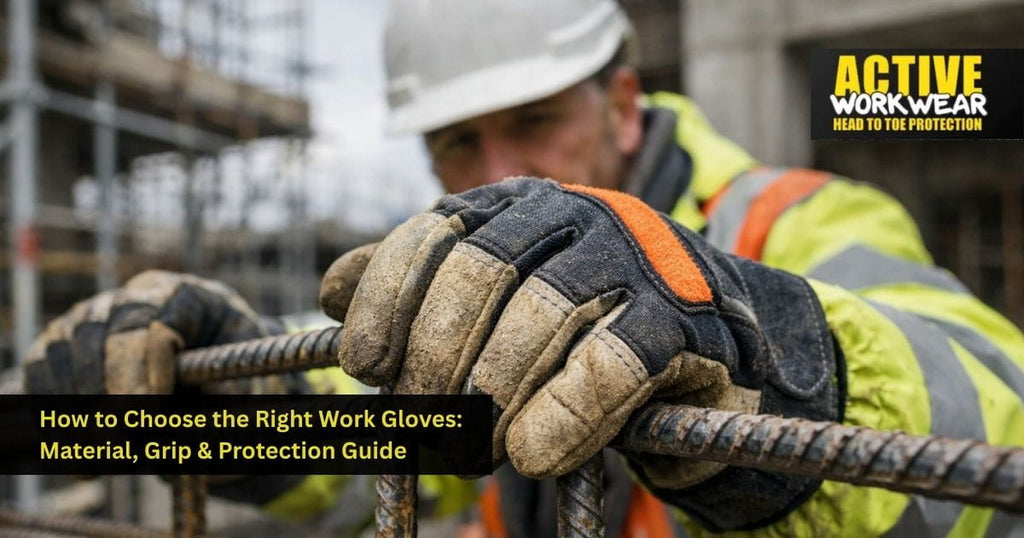
You're halfway through a shift, gripping wet rebar, when your glove tears. Your hand is exposed and the job stops. Suddenly you're wondering why you chose the cheap option.
Choosing the wrong work gloves does not just cost money. It can lead to serious injuries, lost productivity and unnecessary downtime on site. Whether you work in construction, electrical installations, landscaping or warehouse operations, the right gloves are essential protection.
Different jobs require different types of gloves. A pair that works perfectly for mechanics may not be suitable for electricians, and gloves designed for warehouse work might fail quickly on a construction site.
This guide explains how to choose the right work gloves based on materials, protection levels, grip, sizing and the type of work you do.
At Active Workwear, we help UK tradespeople choose protective gear that works in real working conditions, not just on paper.
Why the Right Work Gloves Matter
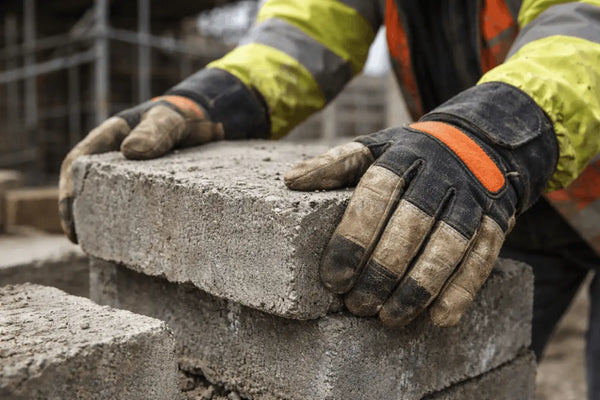
Hand injuries are among the most common workplace accidents in the UK. According to the Health and Safety Executive (HSE), thousands of workers suffer hand related injuries each year, many of which could be prevented with the correct protective equipment.
The wrong gloves do more than increase injury risk. They also affect productivity. Poor fitting gloves reduce grip, slow down work and cause unnecessary fatigue during long shifts.
There is also a false economy in buying cheap gloves. A £5 pair that lasts three weeks costs more over a year than a £15 pair that lasts several months. Durable work gloves often provide better long term value while maintaining reliable protection.
Understanding Work Glove Materials
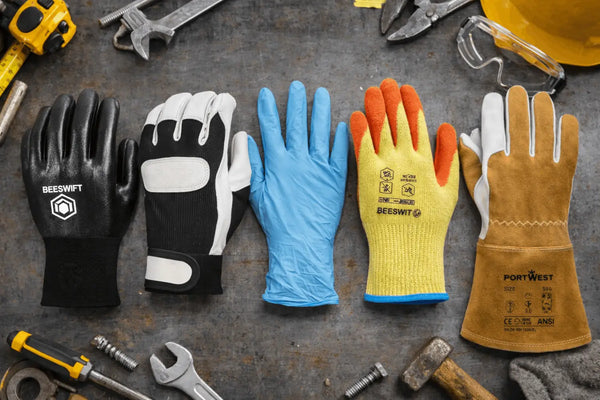
No single material works for every job. Gloves designed for welding will not suit someone working in wet environments, and lightweight warehouse gloves may fail quickly on construction sites.
Work Glove Material Comparison
| Material | Best For | Advantages | Limitations |
|---|---|---|---|
| Leather | Construction and heavy duty tasks | Durable, strong abrasion resistance, heat protection | Less flexible and can become stiff when wet |
| Nitrile Coated | Mechanical work and wet environments | Excellent grip, flexible, oil resistant | Lower abrasion resistance than leather |
| Cut Resistant | Handling sharp materials or metal | Protects against blades and sharp edges | Can reduce dexterity depending on level |
| Rubber / Latex | Wet or chemical environments | Waterproof and chemical resistant | Less breathable during long shifts |
Leather Gloves
Leather gloves offer excellent abrasion resistance and natural heat protection, making them ideal for carpentry, welding and heavy lifting. Workers handling high temperatures often use specialised welding gloves designed for extreme heat protection.
- Abrasion resistance for rough materials
- Heat protection for welding or hot surfaces
- Durability for construction work
Nitrile Coated Gloves
Nitrile coated gloves provide strong grip and flexibility. These gloves perform well in oily or wet conditions and allow greater dexterity for handling tools.
Many tradespeople prefer gripper gloves designed for construction work because the textured palm improves handling of heavy or slippery materials.
Latex vs Rubber Gloves
Latex gloves provide excellent flexibility but may cause allergic reactions for some people. Synthetic rubber gloves such as nitrile provide similar protection without allergy concerns.
For short term protection or hygiene environments, many workplaces rely on disposable gloves that can be replaced quickly when contaminated or damaged.
Cut Resistant Gloves and EN 388 Ratings
The EN 388 cut resistance rating measures how well gloves protect against sharp materials. Levels range from A to F.
- Level A–B: basic cut protection
- Level C–D: moderate protection for construction work
- Level E–F: high protection for handling sharp metal or glass
You can explore options designed for demanding tasks in our work gloves and hand protection collection.
Key Features That Actually Matter
Grip
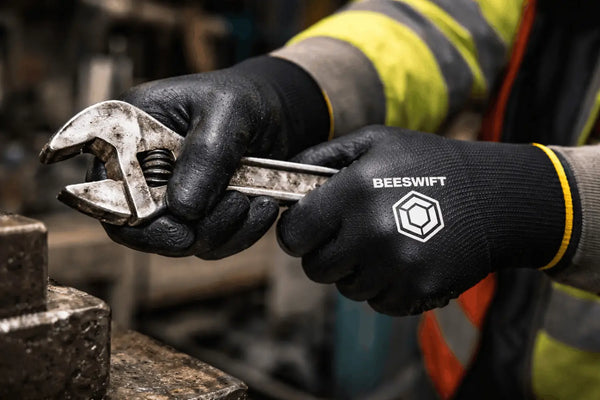
Grip determines control. Without proper grip you risk dropping materials or losing control of tools.
- Palm coatings improve traction
- Textured surfaces improve grip in wet conditions
- Full coatings increase waterproofing
Tradespeople handling heavy materials often prefer construction gripper gloves for improved control.
Abrasion Resistance
Abrasion resistance determines how well gloves withstand friction and wear. Higher abrasion ratings help extend glove lifespan in demanding environments.
Impact Protection
Thermoplastic rubber knuckle guards help protect hands from crushing injuries and impacts when working with heavy materials.
Thermal Protection
Outdoor work during winter requires gloves designed for cold weather. Workers often rely on insulated gloves for cold protection to maintain dexterity in freezing temperatures.
Choosing Work Gloves Based on Working Conditions
Matching your gloves to your environment helps improve both safety and comfort.
- Wet environments – nitrile coated gloves with strong grip
- Cold weather – insulated gloves for cold protection
- High heat work – welding gloves designed for heat resistance
- Heavy construction work – gripper gloves for improved handling
- Light duty or hygiene work – disposable gloves
How to Choose Work Gloves by Trade
Construction Workers
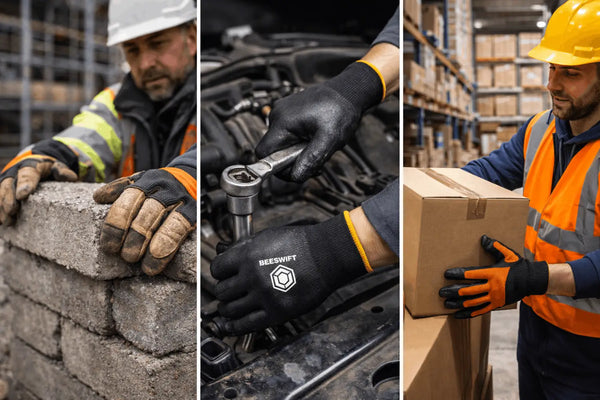
Construction work requires durable gloves with strong abrasion resistance and reinforced palms. Many workers rely on construction gripper gloves for improved grip and protection when handling materials.
Electricians
Electrical work requires gloves that meet specific insulation standards. Standard work gloves should never be used when working with live electrical systems.
Mechanics
Mechanics benefit from nitrile coated gloves that offer dexterity and resistance to oils and chemicals.
Warehouse Workers
Warehouse work often requires lightweight gloves that balance comfort and grip during repetitive handling tasks.
Groundworkers and Landscapers
Outdoor work requires durable gloves capable of handling rough materials, soil and changing weather conditions.
The Sizing Mistake That Compromises Safety
Ill fitting gloves are uncomfortable and potentially dangerous. Gloves should fit snugly without restricting finger movement.
- Small: 18–20 cm
- Medium: 20–23 cm
- Large: 23–25 cm
- Extra Large: 25–28 cm
When to Replace Work Gloves
Even high quality gloves need replacing eventually. Replace gloves immediately when you notice:
- Holes or torn seams
- Loss of grip
- Cracking or stiffness in materials
- Reduced flexibility
Common Work Glove Buying Mistakes
- Choosing price over protection
- Ignoring seasonal conditions
- Choosing the wrong glove size
- Ignoring EN safety ratings
- Using one pair of gloves for every task
Frequently Asked Questions
What material is best for construction gloves?
Leather or reinforced synthetic gloves with strong abrasion resistance usually work best for construction environments.
How do I choose the correct EN 388 cut level?
General handling tasks require lower levels while construction and metal work require higher protection levels.
Can work gloves be washed?
Some synthetic gloves can be hand washed. Leather gloves should not be machine washed.
How long should work gloves last?
The lifespan of work gloves depends on the intensity of use. Gloves used daily in construction may last several weeks, while lighter duty gloves can last several months before needing replacement.
Do I need different gloves for winter?
Yes. Cold weather work often requires insulated gloves designed for thermal protection. These gloves help maintain warmth and dexterity while protecting hands from freezing conditions.
Conclusion
Your hands are one of the most important tools you have on site. Choosing the right gloves protects your safety, improves grip and helps you work more efficiently throughout the day.
Explore our full range of work gloves and hand protection to find reliable protection designed for real trade environments.
- Posted in:
- Construction PPE
- Construction Workwear
- Hand Protection
- PPE Buying Guide
- Safety Gloves
- Trade Safety
- Work Gloves
- Workwear Guide